Wednesday, 27 February 2013

Six kidnapped foreign sailors freed in Nigeria


(Reuters) - Six foreign sailors were freed unharmed overnight by pirates who seized them off the coast of Nigeria's oil-producing region nine days ago, police said on Tuesday.
A rise in piracy off Nigeria's oil-rich coast this month has shown gangs are willing to venture further afield and use more violent tactics, increasing the risk of doing business in Africa's largest energy producer.
One Russian, three Ukrainian and two Indian sailors were taken when gunmen stormed the Armada Tuah 40 miles off the coast of Bayelsa state on February 17.
The ship is owned by Nigerian firm Century Group.
The pirates demanded a 200 million naira ($1.3 million) ransom last week but Bayelsa Police Chief Kingsley Omire told Reuters no money was paid for their release.
Exxon Mobil and Shell officials said last week that security was a major factor in making Nigeria one of the most expensive oil-producing countries to operate in.
Oil and shipping companies have to hire crisis management teams, pay huge insurance premiums and possibly ransoms, as well as face possible damage to their reputations.
Six pirates armed with automatic rifles fired on a cargo ship around 30 miles off the coast of the Niger Delta on Friday, according to piracy watchdog the International Maritime Bureau.
This is at least the sixth attack off Nigeria's coast this month, making it the biggest upsurge in piracy since off Africa's most populous nation since 2010, risk experts say.
(Reporting by Tife Owolabi; Writing by Joe Brock; Editing by Jon Hemming)

Six kidnapped foreign sailors freed in Nigeria


(Reuters) - Six foreign sailors were freed unharmed overnight by pirates who seized them off the coast of Nigeria's oil-producing region nine days ago, police said on Tuesday.
A rise in piracy off Nigeria's oil-rich coast this month has shown gangs are willing to venture further afield and use more violent tactics, increasing the risk of doing business in Africa's largest energy producer.
One Russian, three Ukrainian and two Indian sailors were taken when gunmen stormed the Armada Tuah 40 miles off the coast of Bayelsa state on February 17.
The ship is owned by Nigerian firm Century Group.
The pirates demanded a 200 million naira ($1.3 million) ransom last week but Bayelsa Police Chief Kingsley Omire told Reuters no money was paid for their release.
Exxon Mobil and Shell officials said last week that security was a major factor in making Nigeria one of the most expensive oil-producing countries to operate in.
Oil and shipping companies have to hire crisis management teams, pay huge insurance premiums and possibly ransoms, as well as face possible damage to their reputations.
Six pirates armed with automatic rifles fired on a cargo ship around 30 miles off the coast of the Niger Delta on Friday, according to piracy watchdog the International Maritime Bureau.
This is at least the sixth attack off Nigeria's coast this month, making it the biggest upsurge in piracy since off Africa's most populous nation since 2010, risk experts say.
(Reporting by Tife Owolabi; Writing by Joe Brock; Editing by Jon Hemming)

Tuesday, 26 February 2013

Rocket From Gaza Hits Israel, Breaking Cease-Fire


Tsafrir Abayov/Associated Press
Israeli explosives experts gathered near a rocket believed to have been fired from the Gaza Strip, landing near Ashkelon, on Tuesday.

JERUSALEM — For the first time in more than three months, at least one rocket fired from the Gaza Strip landed in southern Israel early on Tuesday morning, according to Israeli authorities, breaking a cease-fire that had been in place after eight days of intense violence between Israel and Gaza last fall.

The Israeli police and military reported that a single Grad rocket landed in a road outside the city of Ashkelon, causing damage but no injuries.
A subgroup of the Al Aqsa Martyrs Brigade, the military wing of the Palestinians’ Fatah faction, said in an e-mailed statement that it had fired the rocket in “an initial natural response to the assassination of prisoner Arafat Jaradat,” a 30-year-old Palestinian who died in an Israeli jail on Saturday. The statement also said that Palestinians “should resist their enemy with all available means.”
Palestinian officials have blamed Mr. Jaradat’s death on what they described as “severe torture” during interrogation after his arrest Feb. 21 for throwing rocks at Israeli settlers in November. The Israeli authorities said that an autopsy conducted on Sunday could not determine the cause of death and that the bruising and broken ribs the Palestinians cited as evidence of torture could have been caused by resuscitation efforts.
Prime Minister Benjamin Netanyahu’s office declined to comment on the rocket fire, but has generally held Hamas, the militant Islamic faction that has ruled the Gaza Strip since 2007, responsible for all attacks emanating from the territory. President Shimon Peres, who was visiting southern Israel on a previously scheduled tour, said, “Quiet will be met with quiet; missiles will be met with a response.”
“I believe both sides have a deep interest in lowering the flames,” Mr. Peres added.
Mushir al-Masri, a Hamas lawmaker, said in an interview that the statement from the Al Aqsa group was a “fabrication” and that Hamas “did not find that any of the working and known resistance groups have fired any projectile.” In any case, Mr. Masri said Israel was “fully responsible for the consequences of the wave of the Palestinian public fury.” He also accused Israel of violating the cease-fire first, citing several incidents in which Gazans have been shot near the strip’s borders with Israel and fishermen attacked at sea; the Israeli authorities have said their soldiers and sailors were only responding to efforts to breach the new limits set out in the cease-fire agreement.
After the rocket fire Tuesday, Israel shut Kerem Shalom, the crossing through which commercial goods enter Gaza from Israel, and closed its Erez border crossing except for medical, humanitarian and “exceptional” cases, according to a statement from the military.
Sari Bashi, executive director of Gisha, a group that advocates for lifting Israel’s restrictions on the Gaza Strip, protested the closures in a letter to Israel’s defense minister, saying the timing raised “serious concern that this is not a travel restriction necessitated by a concrete and weighty security imperative but rather a punitive act aimed at Gaza’s civilian population.” She called the move “a dangerous regression to a policy that violates humanitarian law.”
The rocket fire came after several days of demonstrations in Gaza and across the West Bank in solidarity with hunger-striking Palestinian prisoners and in protest of Mr. Jaradat’s death. Many of the protests had been marked by clashes between the protesters and Israeli soldiers and settlers, with two Palestinian teenagers sustaining serious gunshot wounds on Monday at Rachel’s Tomb, near Bethlehem.
During a rally Sunday in Gaza, Hamas officials had expressed frustration with its rival Fatah faction in the West Bank for not doing more to support the prisoners. Attallah Abu Al-Sebah, Hamas’s minister of prisoner affairs, urged Fatah “to set the hand of resistance free to deter the occupation and stop its crimes against the prisoners,” and called for kidnapping Israeli soldiers “instead of pursuing playful negotiations that brought nothing to the Palestinian cause.”
Gal Berger, a reporter for Israel Radio who focuses on the Palestinian territories, said the rockets were “designed to signal that Gaza is not cut off from what goes on” in the West Bank, describing the attack as “lip service, to show that they are not sitting on the sidelines.”

Rocket From Gaza Hits Israel, Breaking Cease-Fire


Tsafrir Abayov/Associated Press
Israeli explosives experts gathered near a rocket believed to have been fired from the Gaza Strip, landing near Ashkelon, on Tuesday.

JERUSALEM — For the first time in more than three months, at least one rocket fired from the Gaza Strip landed in southern Israel early on Tuesday morning, according to Israeli authorities, breaking a cease-fire that had been in place after eight days of intense violence between Israel and Gaza last fall.

The Israeli police and military reported that a single Grad rocket landed in a road outside the city of Ashkelon, causing damage but no injuries.
A subgroup of the Al Aqsa Martyrs Brigade, the military wing of the Palestinians’ Fatah faction, said in an e-mailed statement that it had fired the rocket in “an initial natural response to the assassination of prisoner Arafat Jaradat,” a 30-year-old Palestinian who died in an Israeli jail on Saturday. The statement also said that Palestinians “should resist their enemy with all available means.”
Palestinian officials have blamed Mr. Jaradat’s death on what they described as “severe torture” during interrogation after his arrest Feb. 21 for throwing rocks at Israeli settlers in November. The Israeli authorities said that an autopsy conducted on Sunday could not determine the cause of death and that the bruising and broken ribs the Palestinians cited as evidence of torture could have been caused by resuscitation efforts.
Prime Minister Benjamin Netanyahu’s office declined to comment on the rocket fire, but has generally held Hamas, the militant Islamic faction that has ruled the Gaza Strip since 2007, responsible for all attacks emanating from the territory. President Shimon Peres, who was visiting southern Israel on a previously scheduled tour, said, “Quiet will be met with quiet; missiles will be met with a response.”
“I believe both sides have a deep interest in lowering the flames,” Mr. Peres added.
Mushir al-Masri, a Hamas lawmaker, said in an interview that the statement from the Al Aqsa group was a “fabrication” and that Hamas “did not find that any of the working and known resistance groups have fired any projectile.” In any case, Mr. Masri said Israel was “fully responsible for the consequences of the wave of the Palestinian public fury.” He also accused Israel of violating the cease-fire first, citing several incidents in which Gazans have been shot near the strip’s borders with Israel and fishermen attacked at sea; the Israeli authorities have said their soldiers and sailors were only responding to efforts to breach the new limits set out in the cease-fire agreement.
After the rocket fire Tuesday, Israel shut Kerem Shalom, the crossing through which commercial goods enter Gaza from Israel, and closed its Erez border crossing except for medical, humanitarian and “exceptional” cases, according to a statement from the military.
Sari Bashi, executive director of Gisha, a group that advocates for lifting Israel’s restrictions on the Gaza Strip, protested the closures in a letter to Israel’s defense minister, saying the timing raised “serious concern that this is not a travel restriction necessitated by a concrete and weighty security imperative but rather a punitive act aimed at Gaza’s civilian population.” She called the move “a dangerous regression to a policy that violates humanitarian law.”
The rocket fire came after several days of demonstrations in Gaza and across the West Bank in solidarity with hunger-striking Palestinian prisoners and in protest of Mr. Jaradat’s death. Many of the protests had been marked by clashes between the protesters and Israeli soldiers and settlers, with two Palestinian teenagers sustaining serious gunshot wounds on Monday at Rachel’s Tomb, near Bethlehem.
During a rally Sunday in Gaza, Hamas officials had expressed frustration with its rival Fatah faction in the West Bank for not doing more to support the prisoners. Attallah Abu Al-Sebah, Hamas’s minister of prisoner affairs, urged Fatah “to set the hand of resistance free to deter the occupation and stop its crimes against the prisoners,” and called for kidnapping Israeli soldiers “instead of pursuing playful negotiations that brought nothing to the Palestinian cause.”
Gal Berger, a reporter for Israel Radio who focuses on the Palestinian territories, said the rockets were “designed to signal that Gaza is not cut off from what goes on” in the West Bank, describing the attack as “lip service, to show that they are not sitting on the sidelines.”

Sunday, 24 February 2013

Catholic bishop forced to resign after photos of him hugging woman in bikini emerge

1
From www.ynaija.com
A Catholic bishop busted cavorting on a beach with a scantily-clad beauty has claimed she is just ‘an old friend’ and insisted he is still ‘devoted to God’.
Argentine Fernando MarĂ­a Bargallo, 59, was left red-faced after footage emerged of him swimming and cuddling with the blonde at a secluded luxury Mexican hideaway.
He initially denied it was him in the video, but later admitted he does play a starring role, and is now under investigation by the Vatican.

Old friends: Argentine priest Fernando MarĂ­a Bargallo, 59, was left red-faced after footage emerged of him swimming and cuddling with the blonde at a secluded luxury Mexican hideawayOld friends: Argentine priest Fernando MarĂ­a Bargallo, 59, was left red-faced after footage emerged of him swimming and cuddling with the blonde at a secluded luxury Mexican hideaway

A Catholic bishop busted cavorting on a beach with a scantily-clad beauty has claimed she is just 'an old friend' and insisted he is still 'devoted to God'
Argentine bishop Fernando MarĂ­a Bargallo
Busted: Bargallo with the mystery blonde (left) and in his normal clothes (right)

Casual: The Bishop initially denied it was him in the video, but later admitted he does play a starring role, and is now under investigation by the VaticanCasual: The Bishop initially denied it was him in the video, but later admitted he does play a starring role, and is now under investigation by the Vatican
He could now face being sacked from his post as Bishop for the Roman Catholic Diocese of Merlo-Moreno, a suffragan of the Archdiocese of Buenos Aires.
Bargallo said he recognised the ‘recklessness’ of his behaviour and the ‘ambiguity’ of the film, which he claimed was taken in 2011.
But he has insisted that the woman was a ‘very old friend’ who he has known ‘since I could reason’.
He said: ‘The photographs are, in effect, from an encounter in Mexico where I coincided for various reasons, two years ago, with a friend from my childhood.’
Just friends: He has insisted that the woman was a 'very old friend' who he has known 'since I could reason'
Just friends: He has insisted that the woman was a ‘very old friend’ who he has known ‘since I could reason’

Bishop
catholic
Helping: Bargallo is also head of the CĂ¡ritas LatinoamĂ©rica organisation which helps the development of impoverished people across the continent

Measures: He could face being sacked from his post as Bishop for the Roman Catholic Diocese of Merlo-Moreno
He said there were other people there, who did not appear in the images, and he had a strong relationship with the woman’s family, La Nacion reported.
But he has not responded to questions as to who funded the lavish trip to the Puerto Vallarta resort on Mexico’s Pacific coast.
Bargallo is also head of the CĂ¡ritas LatinoamĂ©rica organisation which helps the development of impoverished people across the continent.
catholic
catholic
Silent: But he has not responded to questions as to who funded the lavish trip to the Puerto Vallarta resort on Mexico’s Pacific coast

Catholic bishop forced to resign after photos of him hugging woman in bikini emerge

1
From www.ynaija.com
A Catholic bishop busted cavorting on a beach with a scantily-clad beauty has claimed she is just ‘an old friend’ and insisted he is still ‘devoted to God’.
Argentine Fernando MarĂ­a Bargallo, 59, was left red-faced after footage emerged of him swimming and cuddling with the blonde at a secluded luxury Mexican hideaway.
He initially denied it was him in the video, but later admitted he does play a starring role, and is now under investigation by the Vatican.

Old friends: Argentine priest Fernando MarĂ­a Bargallo, 59, was left red-faced after footage emerged of him swimming and cuddling with the blonde at a secluded luxury Mexican hideawayOld friends: Argentine priest Fernando MarĂ­a Bargallo, 59, was left red-faced after footage emerged of him swimming and cuddling with the blonde at a secluded luxury Mexican hideaway

A Catholic bishop busted cavorting on a beach with a scantily-clad beauty has claimed she is just 'an old friend' and insisted he is still 'devoted to God'
Argentine bishop Fernando MarĂ­a Bargallo
Busted: Bargallo with the mystery blonde (left) and in his normal clothes (right)

Casual: The Bishop initially denied it was him in the video, but later admitted he does play a starring role, and is now under investigation by the VaticanCasual: The Bishop initially denied it was him in the video, but later admitted he does play a starring role, and is now under investigation by the Vatican
He could now face being sacked from his post as Bishop for the Roman Catholic Diocese of Merlo-Moreno, a suffragan of the Archdiocese of Buenos Aires.
Bargallo said he recognised the ‘recklessness’ of his behaviour and the ‘ambiguity’ of the film, which he claimed was taken in 2011.
But he has insisted that the woman was a ‘very old friend’ who he has known ‘since I could reason’.
He said: ‘The photographs are, in effect, from an encounter in Mexico where I coincided for various reasons, two years ago, with a friend from my childhood.’
Just friends: He has insisted that the woman was a 'very old friend' who he has known 'since I could reason'
Just friends: He has insisted that the woman was a ‘very old friend’ who he has known ‘since I could reason’

Bishop
catholic
Helping: Bargallo is also head of the CĂ¡ritas LatinoamĂ©rica organisation which helps the development of impoverished people across the continent

Measures: He could face being sacked from his post as Bishop for the Roman Catholic Diocese of Merlo-Moreno
He said there were other people there, who did not appear in the images, and he had a strong relationship with the woman’s family, La Nacion reported.
But he has not responded to questions as to who funded the lavish trip to the Puerto Vallarta resort on Mexico’s Pacific coast.
Bargallo is also head of the CĂ¡ritas LatinoamĂ©rica organisation which helps the development of impoverished people across the continent.
catholic
catholic
Silent: But he has not responded to questions as to who funded the lavish trip to the Puerto Vallarta resort on Mexico’s Pacific coast

Friday, 22 February 2013

Police officers in Mexico suspected in alleged rape

(CNN) -- Police officers in the Mexican resort town of Playa del Carmen are suspects in the alleged rape of an Italian citizen earlier this month, according to the local state's attorney's office.
The alleged rape occurred on February 12, when the victim and a male companion were leaving a night club in Playa del Carmen between 3 and 4 a.m., said Maria Antonia Salmeron, a spokeswoman with the state's attorney's office of Quintana Roo, the state where Playa del Carmen and Cancun are located.
The man, also an Italian citizen, decided to stop at a nearby alley to urinate. That's when the couple was intercepted by the police. Subsequently, the woman was attacked by the officers of the Playa del Carmen Police Department, Salmeron said.
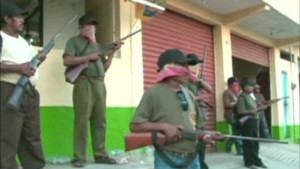
Community police take on Mexican cartels
"(The suspects) detained her, and these young men caught (her) when she was in an 'inconvenient' state and took (advantage of the situation), or rather, took advantage of her," said Carlos Bibiano Villa Castillo, Quinata Roo security secretary, according to Mexico's Foro TV.
The victim, who is a resident of Playa del Carmen, reported the incident to police, Salmeron said.
Salmeron identified the suspects as Mardonio Guzman Gomez and Jose Manuel Enriquez Hernandez, who have been charged with rape and abuse of authority. Playa del Carmen Police Commander Ramon Bolainas Xicotencatl is at-large, Salmeron said
According to the government news agency Notimex, the police officers also demanded a bribe of 3,000 Mexican pesos (about $235) from their victims. When the police officers realized the Italians had no money, the woman was attacked, Notimex said. Gaspar Armando Garcia Torres, Quintana Roo's state's attorney, confirmed the bribe attempt.
"We were obviously very concerned after we learned about the alleged rape. That's why we immediately launched an investigation," Salmeron said.
The alleged rape happened only eight days after six Spanish tourists were allegedly raped in the Mexican beach resort of Acapulco. Officials in the state of Guerrero, where Acapulco is located, announced the arrests of five suspects a week after the attack.
The six victims were among 14 people victimized by hooded gunmen who burst into a beach bungalow in the resort town before dawn on February 4.
An investigator in the Acapulco incident said the suspects, all between the ages of 20 and 30, also stole cell phones, iPads and tennis shoes from the victims, who allegedly had bought drugs from their attackers the day before the rape.
According to a recent U.S. State Department travel warning "resort areas and tourist destinations in Mexico generally do not see the levels of drug-related violence and crime reported in the border region and in areas along major trafficking routes."
The warning published last November says "no advisory is in effect" for tourist areas in Quintana Roo, including Cancun, Cozumel, Playa del Carmen, Riviera Maya and Tulum.

Police officers in Mexico suspected in alleged rape

(CNN) -- Police officers in the Mexican resort town of Playa del Carmen are suspects in the alleged rape of an Italian citizen earlier this month, according to the local state's attorney's office.
The alleged rape occurred on February 12, when the victim and a male companion were leaving a night club in Playa del Carmen between 3 and 4 a.m., said Maria Antonia Salmeron, a spokeswoman with the state's attorney's office of Quintana Roo, the state where Playa del Carmen and Cancun are located.
The man, also an Italian citizen, decided to stop at a nearby alley to urinate. That's when the couple was intercepted by the police. Subsequently, the woman was attacked by the officers of the Playa del Carmen Police Department, Salmeron said.
Community police take on Mexican cartels
"(The suspects) detained her, and these young men caught (her) when she was in an 'inconvenient' state and took (advantage of the situation), or rather, took advantage of her," said Carlos Bibiano Villa Castillo, Quinata Roo security secretary, according to Mexico's Foro TV.
The victim, who is a resident of Playa del Carmen, reported the incident to police, Salmeron said.
Salmeron identified the suspects as Mardonio Guzman Gomez and Jose Manuel Enriquez Hernandez, who have been charged with rape and abuse of authority. Playa del Carmen Police Commander Ramon Bolainas Xicotencatl is at-large, Salmeron said
According to the government news agency Notimex, the police officers also demanded a bribe of 3,000 Mexican pesos (about $235) from their victims. When the police officers realized the Italians had no money, the woman was attacked, Notimex said. Gaspar Armando Garcia Torres, Quintana Roo's state's attorney, confirmed the bribe attempt.
"We were obviously very concerned after we learned about the alleged rape. That's why we immediately launched an investigation," Salmeron said.
The alleged rape happened only eight days after six Spanish tourists were allegedly raped in the Mexican beach resort of Acapulco. Officials in the state of Guerrero, where Acapulco is located, announced the arrests of five suspects a week after the attack.
The six victims were among 14 people victimized by hooded gunmen who burst into a beach bungalow in the resort town before dawn on February 4.
An investigator in the Acapulco incident said the suspects, all between the ages of 20 and 30, also stole cell phones, iPads and tennis shoes from the victims, who allegedly had bought drugs from their attackers the day before the rape.
According to a recent U.S. State Department travel warning "resort areas and tourist destinations in Mexico generally do not see the levels of drug-related violence and crime reported in the border region and in areas along major trafficking routes."
The warning published last November says "no advisory is in effect" for tourist areas in Quintana Roo, including Cancun, Cozumel, Playa del Carmen, Riviera Maya and Tulum.

Rape and Killing of 3 Young Sisters Shocks India


India Gang Rape.JPEGPolice were searching villages in western India on Friday for suspects in the rape and killing of three young sisters, as Indians still angry over the fatal gang rape of a woman on a New Delhi bus in December face another heinous sexual attack.
The bodies of the sisters — aged 7, 9 and 11 — were found Feb. 16 in a village well in Bhandara district in Maharashtra after they had gone missing from school two days earlier, said police officer Abhinav Deshmukh. The area is more than 1,000 kilometers (630 miles) south of New Delhi, the capital.
The victims' mother said police did not take the case seriously and did nothing for several days until villagers held protests.
Deshmukh said Friday that 10 teams of 30 investigators were working on the case and that he was confident they would find the killers soon.
Police first dismissed the deaths as accidental, the Press Trust of India news agency reported. The girls' mother accused police of a shoddy investigation and said they did nothing for two days. Enraged villagers forced shops to close, burned tires and blocked a national highway passing in the area for hours earlier this week, demanding justice.
AP
Protesters hold placards near Indian... View Full Caption
Police eventually registered a case of rape and murder after a post-mortem of the girls found that they had been sexually abused and brutally killed, PTI said.
One police officer has been suspended for not acting promptly, Indian Heavy Industries Minister Praful Patel, who represents Bhandara district in Parliament, said Thursday.
Cabinet Minister Manish Tewari called the killings a "very, very heinous assault" and said Prime Minister Manmohan Singh was sending 1 million rupees ($18,300) to the girls' family.
The case has horrified Indians two months after they were outraged by the gang rape and killing of a young woman on a moving New Delhi bus.
The gang rape sparked nationwide protests about India's treatment of women and spurred the government to hurry through a new package of laws to protect them.
The gang rape victim and her male friend, who also was badly beaten up in the attack, were dumped naked on the roadside, and the woman died from her injuries two weeks later in a Singapore hospital. Five men are being tried on rape and murder charges in that case, while a sixth, who is underage, is in juvenile court.
A new law enacted by the government has increased the prison sentences for rape from the existing seven to 10 years to a maximum of 20 years. It also provides for the death penalty in extreme cases of rape that result in death or leave the victim in a coma.

Rape and Killing of 3 Young Sisters Shocks India


India Gang Rape.JPEGPolice were searching villages in western India on Friday for suspects in the rape and killing of three young sisters, as Indians still angry over the fatal gang rape of a woman on a New Delhi bus in December face another heinous sexual attack.
The bodies of the sisters — aged 7, 9 and 11 — were found Feb. 16 in a village well in Bhandara district in Maharashtra after they had gone missing from school two days earlier, said police officer Abhinav Deshmukh. The area is more than 1,000 kilometers (630 miles) south of New Delhi, the capital.
The victims' mother said police did not take the case seriously and did nothing for several days until villagers held protests.
Deshmukh said Friday that 10 teams of 30 investigators were working on the case and that he was confident they would find the killers soon.
Police first dismissed the deaths as accidental, the Press Trust of India news agency reported. The girls' mother accused police of a shoddy investigation and said they did nothing for two days. Enraged villagers forced shops to close, burned tires and blocked a national highway passing in the area for hours earlier this week, demanding justice.
AP
Protesters hold placards near Indian... View Full Caption
Police eventually registered a case of rape and murder after a post-mortem of the girls found that they had been sexually abused and brutally killed, PTI said.
One police officer has been suspended for not acting promptly, Indian Heavy Industries Minister Praful Patel, who represents Bhandara district in Parliament, said Thursday.
Cabinet Minister Manish Tewari called the killings a "very, very heinous assault" and said Prime Minister Manmohan Singh was sending 1 million rupees ($18,300) to the girls' family.
The case has horrified Indians two months after they were outraged by the gang rape and killing of a young woman on a moving New Delhi bus.
The gang rape sparked nationwide protests about India's treatment of women and spurred the government to hurry through a new package of laws to protect them.
The gang rape victim and her male friend, who also was badly beaten up in the attack, were dumped naked on the roadside, and the woman died from her injuries two weeks later in a Singapore hospital. Five men are being tried on rape and murder charges in that case, while a sixth, who is underage, is in juvenile court.
A new law enacted by the government has increased the prison sentences for rape from the existing seven to 10 years to a maximum of 20 years. It also provides for the death penalty in extreme cases of rape that result in death or leave the victim in a coma.

Rape and Killing of 3 Young Sisters Shocks India


India Gang Rape.JPEG Police were searching villages in western India on Friday for suspects in the rape and killing of three young sisters, as Indians still angry over the fatal gang rape of a woman on a New Delhi bus in December face another heinous sexual attack.
The bodies of the sisters — aged 7, 9 and 11 — were found Feb. 16 in a village well in Bhandara district in Maharashtra after they had gone missing from school two days earlier, said police officer Abhinav Deshmukh. The area is more than 1,000 kilometers (630 miles) south of New Delhi, the capital.
The victims' mother said police did not take the case seriously and did nothing for several days until villagers held protests.
Deshmukh said Friday that 10 teams of 30 investigators were working on the case and that he was confident they would find the killers soon.
Police first dismissed the deaths as accidental, the Press Trust of India news agency reported. The girls' mother accused police of a shoddy investigation and said they did nothing for two days. Enraged villagers forced shops to close, burned tires and blocked a national highway passing in the area for hours earlier this week, demanding justice.
AP
Protesters hold placards near Indian... View Full Caption
Police eventually registered a case of rape and murder after a post-mortem of the girls found that they had been sexually abused and brutally killed, PTI said.
One police officer has been suspended for not acting promptly, Indian Heavy Industries Minister Praful Patel, who represents Bhandara district in Parliament, said Thursday.
Cabinet Minister Manish Tewari called the killings a "very, very heinous assault" and said Prime Minister Manmohan Singh was sending 1 million rupees ($18,300) to the girls' family.
The case has horrified Indians two months after they were outraged by the gang rape and killing of a young woman on a moving New Delhi bus.
The gang rape sparked nationwide protests about India's treatment of women and spurred the government to hurry through a new package of laws to protect them.
The gang rape victim and her male friend, who also was badly beaten up in the attack, were dumped naked on the roadside, and the woman died from her injuries two weeks later in a Singapore hospital. Five men are being tried on rape and murder charges in that case, while a sixth, who is underage, is in juvenile court.
A new law enacted by the government has increased the prison sentences for rape from the existing seven to 10 years to a maximum of 20 years. It also provides for the death penalty in extreme cases of rape that result in death or leave the victim in a coma.

Birmingham terror gang who thought 7/7 was not deadly enough found guilty

Chemistry graduate led trio of would-be suicide bombers inspired by al-Qaida who plotted 'murder on a horrendous scale'
Suicide bombers Ashik Ali Irfan Khalid Irfan Naseer guilty
Al-Qaida inspired British Islamic extremists Ashik Ali, Irfan Khalid and Irfan Naseer who were found guilty of plotting a campaign of bombings in crowded areas. Photograph: Handout/Reuters
Three would-be suicide bombers face life in jail after a jury convicted them on Thursday of plotting to carry out terror attacks in the UK which would have been more deadly than the 7/7 bombings in 2005.
The men from Birmingham are the latest group of British-based extremists to be radicalised by the preachings of the now-dead Anwar al-Awlaki, the one-time leader of Al-Qaida in the Arabian Peninsula.
His extremist message continues to be spread from beyond the grave through the English language terror manual he created, Inspire magazine, which is still disseminated via internet forums despite robust attempts by the security services in the UK and abroad to stop it. Videos of sermons by Awlaki were still available late Thursday on YouTube.
The men's plans to create their own 9/11 by making bombs from sports injury cold pack treatments were thwarted by the biggest counter-terror operation mounted in the UK for seven years, which at times involved more than 400 officers and agents.
Convicted on Thursday by a jury at Woolwich crown court, London, of engaging in conduct in preparation of terrorist attacks, the three were key figures in a terror cell in the Sparkhill area of Birmingham. They aimed to detonate eight to 10 suicide bombs and timed explosive devices that prosecutors said could have caused "death and injury on a massive scale". Six other members of the cell had earlier pleaded guilty.
The ringleaders, chemistry graduate Irfan Naseer, 31, and Irfan Khalid, 27, both from Sparkhill had travelled to Pakistan twice for training – on the second occasion spending two months at an al-Qaida training facility in Miran Shah, in north Waziristan, where they had to flee from American drone strikes. They recruited Ashik Ali, 27, from Balsall Heath in Birmingham, on their return, and began to draw others into the plot.
They duped members of the public into donating thousands of pounds to fund their terror plot by posing as collectors for the charity Muslim Aid in Sparkhill. Within two weeks they raised £14,500, which they diverted to fund their activities.
Police in the West Midlands defended the reach of the government's multimillion pound anti-terror strategy, Prevent, at the conclusion of the trial. Despite millions of pounds being spent in the Sparkhill area relatives and friends of some of those involved who became suspicious chose to take action themselves rather than pass information to the police.
Mr Justice Henriques told the guilty men it was clear they were planning to carry out a spectacular bombing campaign and that they would all face life in prison when they are sentenced in April or May. Speaking to Naseer, the judge said he had been convicted on "overwhelming evidence" and that he would face "a very long minimum term".
He said: "You are a highly skilled bomb maker and explosives expert. Your mindset was similarly manifest. You were seeking to recruit a team of somewhere between six and eight suicide bombers to carry out a spectacular bombing campaign, one which would create an anniversary along the lines of 7/7 or 9/11."
Khalid he said was was "very much his (Naseer's) confidant and his right-hand man."
Of Ali, the judge said he "intelligent, devious and highly manipulative."
Marcus Beale, assistant commissioner of West Midlands police, who worked with the security services to intercept the plot, said: "This group was critical of the 7 July bombers because they didn't kill enough people. If they delivered on the plans that they had they would have committed mass murder on a horrendous scale."
However, there was evidence that the men were struggling to get the ingredients for their plot and no targets were identified by the police or security services. When arrested they were found in possession of just one sports cold pack kit which did not contain the key ingredient for the bombs, ammonium nitrate, because the substance is no longer used in the products.
Beale defended the role of Prevent. Relatives and friends were aware that four followers of Naseer, Khalid and Ali had travelled to train in Pakistan in 2011, but instead of contacting the police they successfully used their own contacts in the country to get the men to return home.
Beale said: "It would be fantastic if more information would come from the community. But if my child was going off the rails I would definitely be wanting to help them myself first rather than go the police and any parent would want to do the same so I would not want to be critical."
Naseer and Khalid built their plot on their return from the training camp in Miran Shah, in the summer of 2011. They shared their knowledge of bomb making with Ali, who rented a council flat which became a makeshift bomb factory and the hub of the plot. Experts told the court they could have created a viable device.
But unknown to the men they were being watched by the police and security services who had placed bugs in two cars and the bomb factory which picked up the plot being described as another 9/11.
At one point the three men were heard driving in a car mimicking Formula One commentator Murray Walker, and joking: "It's the four suicide bombers driving around ready to take on England."
Khalid also said of the plot: "This is going to kick them all, the [infidels] that go to the pub and that; they have hit us in our own country, my God they hit us."
Naseer was found guilty of five counts of engaging in conduct in preparation of terrorist attacks, Khalid of four and Ali of three counts – all between Christmas Day 2010 and 19 September 2011.
They are the latest group of British-based extremists to take their inspiration from American-born Awlaki, the Yemen-based cleric who was a leader of AQAP until he was killed by a US drone in September 2011.
Other extremists who have used his sermons and Inspire magazine to self-radicalise include Roshonara Choudhry, who attacked the MP Stephen Timms, and four terrorists from Birmingham who were convicted in 2012 of plotting to blow up the London Stock Exchange. A search of Ali's house after his arrest uncovered a vast library of lectures by Awlaki.
One of the plans discussed by the three – of attaching blades to the wheels of cars in order to mow down pedestrians – came directly from Inspire, the second edition of which describes how to create "the ultimate mowing machine".
Sue Hemming, head of special crime and counter-terrorism in the CPS, said: "A considerable number of investigations have uncovered connection to and support for the teachings of … Awlaki...his pernicious and hateful views unfortunately live on in his recorded speeches and Inspire magazine."
Keith Vaz MP, chair of the home affairs committee, criticised YouTube over Awlaki material being on the site. "Youtube should not be hosting this material. Material which incites violent radicalism should not be on Youtube. They should be much more proactive in taking it down without waiting for complaints."
Azad Ali, chair of the Muslim Safety Forum which has worked with the police to combat Jihadi violence, said that if Awlaki material was found in a book shop a proseuction wouldme made, saying: "Youtube is hosting the same material and there seems to be no action taken against it at all..
YouTube said: "YouTube has Community Guidelines that prohibit dangerous or illegal activities such as bomb-making, hate speech, and incitement to commit violent acts, and we take violations of these guidelines seriously. Our review teams respond to flagged videos around the clock, routinely removing material under those policies. Our flagging tools include a flag labeled "promotes terrorism" to make it easier for our users to identify content that incites violence."

Birmingham terror gang who thought 7/7 was not deadly enough found guilty

Chemistry graduate led trio of would-be suicide bombers inspired by al-Qaida who plotted 'murder on a horrendous scale'
Suicide bombers Ashik Ali Irfan Khalid Irfan Naseer guilty
Al-Qaida inspired British Islamic extremists Ashik Ali, Irfan Khalid and Irfan Naseer who were found guilty of plotting a campaign of bombings in crowded areas. Photograph: Handout/Reuters
Three would-be suicide bombers face life in jail after a jury convicted them on Thursday of plotting to carry out terror attacks in the UK which would have been more deadly than the 7/7 bombings in 2005.
The men from Birmingham are the latest group of British-based extremists to be radicalised by the preachings of the now-dead Anwar al-Awlaki, the one-time leader of Al-Qaida in the Arabian Peninsula.
His extremist message continues to be spread from beyond the grave through the English language terror manual he created, Inspire magazine, which is still disseminated via internet forums despite robust attempts by the security services in the UK and abroad to stop it. Videos of sermons by Awlaki were still available late Thursday on YouTube.
The men's plans to create their own 9/11 by making bombs from sports injury cold pack treatments were thwarted by the biggest counter-terror operation mounted in the UK for seven years, which at times involved more than 400 officers and agents.
Convicted on Thursday by a jury at Woolwich crown court, London, of engaging in conduct in preparation of terrorist attacks, the three were key figures in a terror cell in the Sparkhill area of Birmingham. They aimed to detonate eight to 10 suicide bombs and timed explosive devices that prosecutors said could have caused "death and injury on a massive scale". Six other members of the cell had earlier pleaded guilty.
The ringleaders, chemistry graduate Irfan Naseer, 31, and Irfan Khalid, 27, both from Sparkhill had travelled to Pakistan twice for training – on the second occasion spending two months at an al-Qaida training facility in Miran Shah, in north Waziristan, where they had to flee from American drone strikes. They recruited Ashik Ali, 27, from Balsall Heath in Birmingham, on their return, and began to draw others into the plot.
They duped members of the public into donating thousands of pounds to fund their terror plot by posing as collectors for the charity Muslim Aid in Sparkhill. Within two weeks they raised £14,500, which they diverted to fund their activities.
Police in the West Midlands defended the reach of the government's multimillion pound anti-terror strategy, Prevent, at the conclusion of the trial. Despite millions of pounds being spent in the Sparkhill area relatives and friends of some of those involved who became suspicious chose to take action themselves rather than pass information to the police.
Mr Justice Henriques told the guilty men it was clear they were planning to carry out a spectacular bombing campaign and that they would all face life in prison when they are sentenced in April or May. Speaking to Naseer, the judge said he had been convicted on "overwhelming evidence" and that he would face "a very long minimum term".
He said: "You are a highly skilled bomb maker and explosives expert. Your mindset was similarly manifest. You were seeking to recruit a team of somewhere between six and eight suicide bombers to carry out a spectacular bombing campaign, one which would create an anniversary along the lines of 7/7 or 9/11."
Khalid he said was was "very much his (Naseer's) confidant and his right-hand man."
Of Ali, the judge said he "intelligent, devious and highly manipulative."
Marcus Beale, assistant commissioner of West Midlands police, who worked with the security services to intercept the plot, said: "This group was critical of the 7 July bombers because they didn't kill enough people. If they delivered on the plans that they had they would have committed mass murder on a horrendous scale."
However, there was evidence that the men were struggling to get the ingredients for their plot and no targets were identified by the police or security services. When arrested they were found in possession of just one sports cold pack kit which did not contain the key ingredient for the bombs, ammonium nitrate, because the substance is no longer used in the products.
Beale defended the role of Prevent. Relatives and friends were aware that four followers of Naseer, Khalid and Ali had travelled to train in Pakistan in 2011, but instead of contacting the police they successfully used their own contacts in the country to get the men to return home.
Beale said: "It would be fantastic if more information would come from the community. But if my child was going off the rails I would definitely be wanting to help them myself first rather than go the police and any parent would want to do the same so I would not want to be critical."
Naseer and Khalid built their plot on their return from the training camp in Miran Shah, in the summer of 2011. They shared their knowledge of bomb making with Ali, who rented a council flat which became a makeshift bomb factory and the hub of the plot. Experts told the court they could have created a viable device.
But unknown to the men they were being watched by the police and security services who had placed bugs in two cars and the bomb factory which picked up the plot being described as another 9/11.
At one point the three men were heard driving in a car mimicking Formula One commentator Murray Walker, and joking: "It's the four suicide bombers driving around ready to take on England."
Khalid also said of the plot: "This is going to kick them all, the [infidels] that go to the pub and that; they have hit us in our own country, my God they hit us."
Naseer was found guilty of five counts of engaging in conduct in preparation of terrorist attacks, Khalid of four and Ali of three counts – all between Christmas Day 2010 and 19 September 2011.
They are the latest group of British-based extremists to take their inspiration from American-born Awlaki, the Yemen-based cleric who was a leader of AQAP until he was killed by a US drone in September 2011.
Other extremists who have used his sermons and Inspire magazine to self-radicalise include Roshonara Choudhry, who attacked the MP Stephen Timms, and four terrorists from Birmingham who were convicted in 2012 of plotting to blow up the London Stock Exchange. A search of Ali's house after his arrest uncovered a vast library of lectures by Awlaki.
One of the plans discussed by the three – of attaching blades to the wheels of cars in order to mow down pedestrians – came directly from Inspire, the second edition of which describes how to create "the ultimate mowing machine".
Sue Hemming, head of special crime and counter-terrorism in the CPS, said: "A considerable number of investigations have uncovered connection to and support for the teachings of … Awlaki...his pernicious and hateful views unfortunately live on in his recorded speeches and Inspire magazine."
Keith Vaz MP, chair of the home affairs committee, criticised YouTube over Awlaki material being on the site. "Youtube should not be hosting this material. Material which incites violent radicalism should not be on Youtube. They should be much more proactive in taking it down without waiting for complaints."
Azad Ali, chair of the Muslim Safety Forum which has worked with the police to combat Jihadi violence, said that if Awlaki material was found in a book shop a proseuction wouldme made, saying: "Youtube is hosting the same material and there seems to be no action taken against it at all..
YouTube said: "YouTube has Community Guidelines that prohibit dangerous or illegal activities such as bomb-making, hate speech, and incitement to commit violent acts, and we take violations of these guidelines seriously. Our review teams respond to flagged videos around the clock, routinely removing material under those policies. Our flagging tools include a flag labeled "promotes terrorism" to make it easier for our users to identify content that incites violence."

Two Deadly Explosions Leave Terror Cloud over India

A woman cries out after seeing the body of her husband who was killed in a bomb blast in Hyderbad, India.
Mahesh Kumar A. / AP
An Indian woman wails after seeing her husband's body at a government hospital after he was killed in a bomb blast in Hyderabad on Feb. 21, 2013
At least 12 people have been killed and scores injured on Thursday in twin bombings that authorities believe may have been a terrorist attack in the southern Indian city of Hyderabad. There has been no official confirmation as to the nature of the blasts, but government officials have said they were carried out by a “well trained” group and were coordinated.
Local media are reporting that the blasts come two days after government security agencies sent an advisory to states to tighten security in light of potential threats from militant groups operating in the region related to the recent executions of terrorism suspects Ajmal Kasab and Mohammed Afzal Guru.
In tweets sent out after the attacks on Thursday evening, Indian Prime Minister Manmohan Singh appealed to the public to remain calm. “This is a dastardly attack, the guilty will not go unpunished,” he tweeted. The attack was the first major bombing in India since a blast outside a court in New Delhi in 2011 that killed 11 people.
Police examine the site of an explosion at Dilsukh Nagar in the southern Indian city of Hyderabad
KRISHNENDU HALDER / REUTERS
Police examine the site of an explosion at Dilsukh Nagar in the southern Indian city of Hyderabad on Feb. 21, 2013
India has been on alert since Guru, who was Kashmiri, was executed earlier this month in New Delhi’s Tihar Jail. Guru was convicted of involvement in the 2001 attacks on Parliament in which 14 people were killed, but many in Kashmir in particular believe he did not receive a fair trial and were upset by the handling of his execution.
Forensics teams have reportedly been deployed to the bomb sites along with officials from the National Investigative Agency and Intelligence Bureau. The bombs, which authorities say were attached to two bicycles, were detonated around 7 p.m. outside a movie theater and bus station in a busy area of the city of some 10 million people, according to police.
Singh, in addition to condemning the attacks, announced the government would give 200,000 rupees ($3,700) to relatives of the deceased and 50,000 rupees ($900) to those injured in the attacks. Further compensation has also been offered by the chief minister of the state of Andhra Pradesh, where Hyderabad in located.
(MORE: 10 Killed in Explosions in Southern Indian City)
Almsgiving after terrorist attacks, though, is an unfortunate tactic all too frequently deployed by the government. Long-standing questions about the capability of India’s security and intelligence infrastructure — which reached their highest pitch following the shocking, deadly 2008 assault on one of Mumbai’s ritziest neighborhood — are once more being raised. And speculation swirls: some analysts point the finger at the Indian mujahedin, an Islamist extremist group. In 2007, Hyderabad suffered twin bombings that claimed at least 42 lives; blame then fell on Harkat-ul-Jihad Islam, another extremist group then anchored in Bangladesh.
But no clear leads have emerged, and both politicians and TV commentators urged caution against “rumor mongering” in the breathless hours that followed the attack. Hyderabad, a historic city that’s now one of India’s leading tech centers, is also at the heart of the Telangana movement, which seeks to carve a new state out of Andhra Pradesh. Tensions surrounding the bid have flared up in recent years.

Two Deadly Explosions Leave Terror Cloud over India

A woman cries out after seeing the body of her husband who was killed in a bomb blast in Hyderbad, India.
Mahesh Kumar A. / AP
An Indian woman wails after seeing her husband's body at a government hospital after he was killed in a bomb blast in Hyderabad on Feb. 21, 2013
At least 12 people have been killed and scores injured on Thursday in twin bombings that authorities believe may have been a terrorist attack in the southern Indian city of Hyderabad. There has been no official confirmation as to the nature of the blasts, but government officials have said they were carried out by a “well trained” group and were coordinated.
Local media are reporting that the blasts come two days after government security agencies sent an advisory to states to tighten security in light of potential threats from militant groups operating in the region related to the recent executions of terrorism suspects Ajmal Kasab and Mohammed Afzal Guru.
In tweets sent out after the attacks on Thursday evening, Indian Prime Minister Manmohan Singh appealed to the public to remain calm. “This is a dastardly attack, the guilty will not go unpunished,” he tweeted. The attack was the first major bombing in India since a blast outside a court in New Delhi in 2011 that killed 11 people.
Police examine the site of an explosion at Dilsukh Nagar in the southern Indian city of Hyderabad
KRISHNENDU HALDER / REUTERS
Police examine the site of an explosion at Dilsukh Nagar in the southern Indian city of Hyderabad on Feb. 21, 2013
India has been on alert since Guru, who was Kashmiri, was executed earlier this month in New Delhi’s Tihar Jail. Guru was convicted of involvement in the 2001 attacks on Parliament in which 14 people were killed, but many in Kashmir in particular believe he did not receive a fair trial and were upset by the handling of his execution.
Forensics teams have reportedly been deployed to the bomb sites along with officials from the National Investigative Agency and Intelligence Bureau. The bombs, which authorities say were attached to two bicycles, were detonated around 7 p.m. outside a movie theater and bus station in a busy area of the city of some 10 million people, according to police.
Singh, in addition to condemning the attacks, announced the government would give 200,000 rupees ($3,700) to relatives of the deceased and 50,000 rupees ($900) to those injured in the attacks. Further compensation has also been offered by the chief minister of the state of Andhra Pradesh, where Hyderabad in located.
(MORE: 10 Killed in Explosions in Southern Indian City)
Almsgiving after terrorist attacks, though, is an unfortunate tactic all too frequently deployed by the government. Long-standing questions about the capability of India’s security and intelligence infrastructure — which reached their highest pitch following the shocking, deadly 2008 assault on one of Mumbai’s ritziest neighborhood — are once more being raised. And speculation swirls: some analysts point the finger at the Indian mujahedin, an Islamist extremist group. In 2007, Hyderabad suffered twin bombings that claimed at least 42 lives; blame then fell on Harkat-ul-Jihad Islam, another extremist group then anchored in Bangladesh.
But no clear leads have emerged, and both politicians and TV commentators urged caution against “rumor mongering” in the breathless hours that followed the attack. Hyderabad, a historic city that’s now one of India’s leading tech centers, is also at the heart of the Telangana movement, which seeks to carve a new state out of Andhra Pradesh. Tensions surrounding the bid have flared up in recent years.

2 suicide bombings in the northeast Nigeria city of Maiduguri kill at least 3

Authorities say two separate suicide bombings in Nigeria's northeast city of Maiduguri have killed at least three civilians and injured many soldiers.
Borno State governor Kashim Shettima said a crowded market in the heart of the city was attacked Thursday and engulfed in flames.
A senior security official, who spoke on condition of anonymity because he was not permitted to speak to the press, said there was a suicide bombing at the market. Witnesses said soldiers who stormed the scene of the blast set stalls on fire.
Shettima confirmed another suicide bombing in the city on Wednesday that killed three civilians and injured soldiers.
No group immediately claimed responsibility for the attacks, though Nigeria's predominantly Muslim north has been under attack by the radical Islamic sect known as Boko Haram.
Related Posts Plugin for WordPress, Blogger...