Saturday, 31 March 2018

SECRET REVEALED: How to Last Longer in bed


How To Make Sex Last
When it comes to sex, men and women are wired quite differently. While the man is happy to be Usain Bolt, the women prefer it if they were more akin to Lance Armstrong. Either ways, the duration bit is definitely one of the most difficult sync ups there are. Is there an in-between, a proverbial road less travelled, which will somehow prolong your time in the sack with your partner? There are several ways in which this can be done, their results may vary from person to person, and may be you might need to find one or a combination of a few ways to see what suits you best. 

Woman on Top: While this hasn’t been scientifically proven, the woman on top position is said (according to many men’s and women’s health websites) to prolong intercourse. Also, this position helps the woman control the depth and tempo of the act, and is quite the power trip (if that’s is your kind of thing).

Long, relaxed foreplay: Adopt what some love gurus call the gradual build-up technique. That’s just fancy talk for ‘don’t-rip-his/her-clothes-off-instead-indulge-in some-heavy-petting’. Indulge your more devious side with some roleplay, get a little more experimentative with erotic painting, or try something that will turn him on like a massageor something a bit more daring.

Administer the delay gel: If you’re tired of your man just rolling over after he’s had his fill (so to speak), you might want to take matters into your own hands (figuratively speaking). Talk about using a delay gel, a product whose active ingredient is benzocaine, which desensitises the member in question and makes him go longer. That being said this isn’t a cure for the problem, but more of a short term quick fix. 

Aphrodisiacal allure: Aphrodisiacs like champagne, oysters and strawberries maybe placebos at best, but they sure set the mood for a long, luxuriant evening or session in the sack.

Massage and candles: Who wouldn’t want to be pampered by a naughty masseuse, especially if the massageculminates in something a whole lot steamier. Set the ambience with aromatherapy candles and oils and volunteer to massage him (read erotically, into a state of sheer bliss.) 

Remember that sexual satisfaction is a two way street and helping each other achieve fulfillment is the way to go to prolong every lovemaking session.

*Data Courtesy: Samir Saraiya, CEO, that's personal

How to Last Longer in bed


How To Make Sex Last
When it comes to sex, men and women are wired quite differently. While the man is happy to be Usain Bolt, the women prefer it if they were more akin to Lance Armstrong. Either ways, the duration bit is definitely one of the most difficult sync ups there are. Is there an in-between, a proverbial road less travelled, which will somehow prolong your time in the sack with your partner? There are several ways in which this can be done, their results may vary from person to person, and may be you might need to find one or a combination of a few ways to see what suits you best.

Woman on Top: While this hasn’t been scientifically proven, the woman on top position is said (according to many men’s and women’s health websites) to prolong intercourse. Also, this position helps the woman control the depth and tempo of the act, and is quite the power trip (if that’s is your kind of thing).

Long, relaxed foreplay: Adopt what some love gurus call the gradual build-up technique. That’s just fancy talk for ‘don’t-rip-his/her-clothes-off-instead-indulge-in some-heavy-petting’. Indulge your more devious side with some roleplay, get a little more experimentative with erotic painting, or try something that will turn him on like a massage or something a bit more daring.

Administer the delay gel: If you’re tired of your man just rolling over after he’s had his fill (so to speak), you might want to take matters into your own hands (figuratively speaking). Talk about using a delay gel, a product whose active ingredient is benzocaine, which desensitises the member in question and makes him go longer. That being said this isn’t a cure for the problem, but more of a short term quick fix. 

Aphrodisiacal allure: Aphrodisiacs like champagne, oysters and strawberries maybe placebos at best, but they sure set the mood for a long, luxuriant evening or session in the sack.

Massage and candles: Who wouldn’t want to be pampered by a naughty masseuse, especially if the massage culminates in something a whole lot steamier. Set the ambience with aromatherapy candles and oils and volunteer to massage him (read erotically, into a state of sheer bliss.) 

Remember that sexual satisfaction is a two way street and helping each other achieve fulfillment is the way to go to prolong every lovemaking session.

*Data Courtesy: Samir Saraiya, CEO, that's personal - India's first personal gifting website
*Image courtesy: © Thinkstock photos/ Getty Images

Wednesday, 28 March 2018

Breaking: Police declare Dino Melaye wanted, place him on Interpol watchlist


The police on Wednesday, March 28, declared Dino Melaye wanted. The lawmaker was declared wanted alongside Mohammed Audu, son of a former governor of Kogi state, Abubakar Audu.

Police said the duo have also been placed on Interpol watchlist for allegedly providing false information to the police in relation to an allegation of attempted murder on Melaye’s life sometime last year, Premium Times reports. The announcement, according to the news outlet, was made in a statement signed by Ali Janga, Kogi police commissioner and distributed by the force headquarters on Wednesday, March, 28.

The Nigerian police issued a message to Senator Dino Melaye asking him to appear before it and comply with the court case against him or risk being declared wanted. The police issued this statement on Saturday, March 25 and accused the senator of deliberately ignoring the request to appear before it in spite of the message sent to him. 

The police said that two suspects who were arrested in Kogi claimed the senator gave them firearms to create social unrest. Kogi West senatorial district to recall senator Dino Melaye from the Nigerian Senate.

Tuesday, 27 March 2018

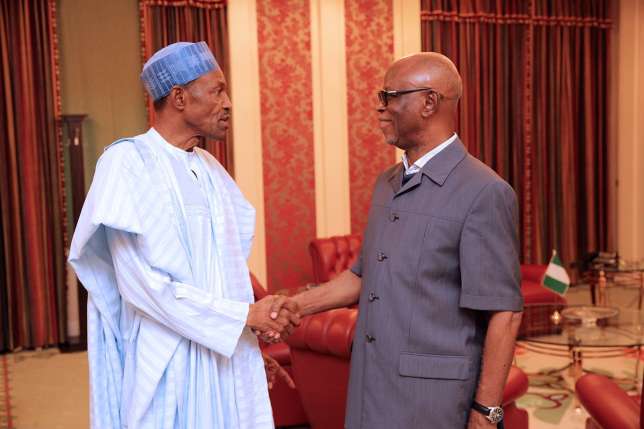
APC crisis: Buhari sacrifices Oyegun, Nullifies tenure extension of NWC, others


President Muhammadu Buhari has sacrificed the national chairman of the All Progressives Congress (APC) in the search for new formula of rebuilding the ruling party and repositioning it for 2019 general elections.
Accordingly, President Buhari at the National Executive Committee meeting on Tuesday in Abuja nullified the elongation of the tenure of the All Progressives Congress (APC) National Chairman, Chief John Odigie-Oyegun, the National Working Committee (NWC) and other executives endorsed at the February 27, 2018, NEC meeting in Abuja chaired by President Buhari, declaring it illegal.
The President stated that after due consultation, it has become necessary to overturn the NEC resolution of February 27, 2018, which endorsed tenure elongation.
The President remarked that tenure elongation breaches the constitution of the APC and Nigeria’s constitution which prescribes that everyone seeking to occupy public office must present himself for election.
President Buhari also told APC members that they must avoid actions that will lead to litigations in court which could deepen the conflicts in the ruling party.
APC national leader, Asiwaju Bola Ahmed Tinubu, was absent at the meeting. Tinubu had also on Monday cautioned APC that elongation of the tenure of Oyegun, the NWC and other executive breaches the party’s constitution.
President Buhari may have aligned with the Tinubu argument in his decision.

Polls reordering: Senate re-introduces Electoral Act amendment bill

Image result for inec

The Senate has begun a fresh move to amend the Electoral Act 2010. A new bill on the amendment is to be presented and passed for first reading today, Tuesday, March 27, according to the Order Paper for today’s plenary, Punch reports. The first version of the bill, which was introduced in the House of Representatives, had been passed by the National Assembly but vetoed by President Muhammadu Buhari. 

The bill had sought to reorder the sequence of polls during a general election, which generated controversy over the allegation that it was targeted at Buhari in the 2019 elections.

Meanwhile, the Attorney General of the Federation and minister of justice, Abubakar Malami, and the Independent National Electoral Commission have given reasons why the court should not allow the NASS to tamper with the already released sequence for the forthcoming general elections.

The NASS, through its lead counsel, Joseph Daudu queried the jurisdiction of the court to stop it from securing two-third majority to override President Buhari’s refusal to assent to the Electoral Act Amendment Bill, 2018, which altered the election sequence. The NASS equally challenged the locus-standi of the plaintiff to institute the action, noting that it failed to tender its Certificate of Registration to enable the court to confirm that it is a genuine political party.

We’ve Learnt From Our Mistakes, PDP Apologises To Nigerians


National Chairman of the Peoples Democratic Party (PDP), Mr Uche Secondus, has apologised to Nigerians for what he described as mistakes made while the party was in power prior to the 2015 general elections.
Giving a keynote speech on Monday, at an event in Abuja with the theme: Nation-building: Resetting The Agenda, he admitted that although the Party did its best while in government, it was not void of mistakes.
According to Secondus, the ability to admit one’s mistakes is key to moving forward especially as the Party has learnt from them.
He, therefore, appealed to Nigerians to put all the party’s wrongs behind and support it in the coming elections.
He said: “I hereby admit that the People’s Democratic Party made many mistakes and it is human, we are not spirits. The ability to admit is a key for moving forward, it is a key for learning. We admit that we have made several mistakes. We also admit that by the grace of God, we have passed through all our challenges, with experience that no other party can boast of.
“Consequently, we were roundly sanctioned by Nigerians, occasioning our loss at the polls in 2015.
“Let me seize this opportunity to apologise for our past mistakes, we have learnt from our mistakes unlike the APC government,” he said.
Speaking further, the PDP National Chairman criticized the ruling All Progressives Congress (APC) saying that the nation has never been more divided than it is now, under the present government.
He, therefore, stressed the importance of nation-building especially at a time like this.
“There are certain circumstances that make nation-building top priority
“Our economy has been under immense pressure especially in the last 34 months of governance by the ruling All Progressives Congress (APC). not even during the civil war has this country been so divided along ethnic and religious fault lines.
“When a country is in such precarious situations, nation-building becomes absolutely inevitable.”
While criticizing the APC for its failure to deliver on its key campaign promises which include fighting corruption, improving national security and boosting the economy, Secondus noted that his party was the only one among several others, that is truly rooted in “strong democratic principles and ideals”.
He, therefore, asked Nigerians to support its cause.
“Realizing the importance of free, credible elections in the life of any democracy, the PDP embarked on massive electoral reforms that ensured the conduct of free, fair credible elections and saw a ruling party lose in an election successfully transcended power top the opposition, it is the first time it is happening in our country and even an example for the entire continent.
“Even though sad about our loss, we as a party are immensely proud of what we consider our most significant achievement of willingly transferring power to opposition when the time came, thus giving a lie to all predictions that Nigeria will break up in 2015.
“Let me alert the current ruling party that no less is expected of them and we hope that they will heed to that advise.
“Only a party like ours, truly founded on strong democratic principles and ideals, ultimately drawing its inspiration from the people hence its motto, ‘PowerTo The People’, could have submitted to the superior will of the people and we did just that in 2015.
“We must humble ourselves before God who created us and tell the truth. We can’t continue as a nation of lies – what are we going to give to our children?
“On behalf of my colleagues and members of this party, we apologize to Nigerians that we have made our mistakes and we are ready to correct them and to build on a new note, on a new agenda because experience is the best teacher and no other Party has it,” Secondus said.

Apologies Are Not Enough-"Confess your sins and fully atone for it", APC Tells PDP

2019 Elections

The All Progressives Congress (APC) has taken a swipe at the opposition Peoples Democratic Party (PDP) over the apology it tendered to Nigerians for mistakes made during its 16-year rule.
A statement signed by the APC’s National Publicity Secretary, Bolaji Abdullahi, Tuesday, said although acknowledged, the apology was belated as Nigerians still suffer from the PDP’s years of misrule.
The APC also said despite the apology, the PDP still needs to “confess their sins and fully atone for it, before restitution is considered”.
The statement read: “The All Progressives Congress (APC) acknowledges the apologies by the Peoples Democracy Party (PDP) for the damage the party has wrought on the country’s democratic fabric during its sixteen-year rule.
“However, despite this belated grovelling apology, PDP will need to come clean, confess to their sins and fully atone for it, before restitution is considered.
“As they say, to err is human but forgiveness is divine. We join PDP in praying to God to forgive them, but Nigerianss are human who are still suffering from the years of PDP’s misrule.
“Therefore, even if Nigerians are gracious enough to forgive, they will not forget in a hurry.”
The PDP on Monday admitted to making mistakes while it was in power and therefore, apologised to Nigerians.
National Chairman of the Party Mr Uche Secondus, made the apology while giving his keynote speech at an event in Abuja with the theme: Nation-building: Resetting The Agenda.
He said the Party was ready to start afresh on a clean slate and therefore, appealed to Nigerians to put behind its wrongdoings.
“We must humble ourselves before God who created us and tell the truth. We can’t continue as a nation of lies – what are we going to give to our children?
“On behalf of my colleagues and members of this party, we apologize to Nigerians that we have made our mistakes and we are ready to correct them and to build on a new note, on a new agenda because experience is the best teacher and no other Party has it,” Secondus said.

MMM Founder, Sergei Mavrodi Dies Of Heart Attack

FILES PHOTO  Founder of the MMM financial pyramid Sergei Mavrodi leaves Matrosskaya Tishina prison in Moscow. The inventor of the largest financial pyramid in Russia, Sergei Mavrodi, died at the age of 62, said on March 26, 2018, the
assistant of this man who spent several years in prison.
Dima KOROTAYEV / AFP

Sergei Mavrodi, an eccentric Russian mathematician who founded the notorious MMM pyramid or Ponzi scheme in the early 1990s that swindled millions out of their savings, has died, his assistant said Monday.
Mavrodi, whose bespectacled face once featured on vouchers issued by the grandiose scheme, died at age 62, his assistant Alexander Vlasov told Moskva news agency.
The fraudster was found unconscious at a public transport stop, Interfax news agency reported, citing a source.
A mathematician who became one of the earliest computer programmers, Mavrodi first went into business selling pirated videos and CDs. He founded a company called MMMM that initially imported office equipment.
He then gave up trading and founded the financial pyramid of the same name that became the largest in Russia.
Lured by a catchy television advertising campaign, an estimated 10 to 15 million people invested and received vouchers that promised a huge return.
Mavrodi became “one of the most recognised personalities” in the country’s popular culture, Rossiiskaya Gazeta state newspaper wrote.
Fresh out of the Soviet Union, Russians generally had little financial knowledge and were naive.
“Mavrodi’s success came from the fact that such types of swindles were a novelty in Russia at the time, plus this was accompanied by a really mass-market and quite cleverly made advertising campaign,” economist Sergei Khestanov told Sputnik radio station.
Mavrodi was elected as a national MP in 1994 — giving him immunity from prosecution as he faced tax evasion charges — although he never turned up to parliament.
The pyramid scheme paid out as long as it continued to grow but inevitably crashed as investors tried to sell off their vouchers at once.
Reportedly 50 committed suicide after the scheme collapsed in 1997 and the company was declared bankrupt.
Mavrodi went into hiding and was eventually arrested in a Moscow rented flat in 2003, reportedly while wearing a wig.
He was charged with fraud, for which he received a 4 1/2 year sentence in 2007, almost all of which he had already served in pre-trial detention.
Not dissuaded and still protesting his innocence, he announced several new MMM schemes in various countries that were based online and even launched a new crypto-currency called Mavro.
A Russian-language film based on his life called “The Pyramid” was released in 2011.

Monday, 26 March 2018

Zuckerberg’s Facebook in Deep Trouble Over Cambridge Analytica Data Harvesting

Facebook Founder and CEO Mark Zuckerberg       


Mark Zuckerberg rose to wealth and fame with a mission of connecting everyone through Facebook but now faces the wrath of users outraged he isn’t doing more to defend their data.
The latest crisis laying siege to the leading online social network has raised the spectre that he has lost control of his creation and been naive about the unintended consequences of people sharing so much about themselves.
“If Facebook was a typical company, and Zuckerberg was the founder, he would probably be gone,” said tech industry analyst Rob Enderle of Enderle Group.
“He looks like a guy who really doesn’t know what he is doing. He is not the hero that a lot of people had viewed him as; his reputation and image are badly damaged.”
Facebook has prospered on digital advertising that benefits from being able to use what people share about themselves to target ads.
If Facebook was betting on people’s better natures when it came to truthfully sharing, respecting others, and being able to connect with anyone, it wasn’t always a winning wager.
The California-based social network has been a flashpoint for controversies about bullying, harassment, free speech, extremist propaganda, election meddling, privacy, and more.
“They don’t put enough effort into making sure the user is protected and the experience is assured,” analyst Enderle said.
“They only care about the advertisers, and the user is basically a digital slave.”

Dropout to billionaire

A public apology by Zuckerberg failed to quell outrage over the hijacking of personal data from millions of people, as critics demanded that the social media giant go much further to protect user privacy.
Belatedly speaking out about the harvesting of Facebook user data by a British firm linked to President Donald Trump’s 2016 election campaign, Zuckerberg admitted Wednesday to betraying the trust of its more than two billion users, and promised to “step up.”
Vowing to stop data leaking to application makers and to give users more control over their information, he also said he was ready to testify before US lawmakers following — which a powerful congressional committee promptly asked him to do.
Zuckerberg has grown from a Harvard dropout who changed what it means to be social into a billionaire philanthropist bent on shaping a better world for his daughters.
Zuckerberg and his doctor wife, Priscilla Chan, have pledged to give away their Facebook fortune to make the world a healthier, happier place for children.
“Having kids changes a lot,” Zuckerberg said this week in an interview with CNN.
“I used to think that the most important thing to me by far was having the greatest impact across the world as I can; now I just really care about building something my girls are going to grow up and be proud of me for.”
Zuckerberg cemented his fortune, and a place in Silicon Valley history, by leading Facebook to a historic Wall Street debut in 2012.
The $16 billion IPO was structured to keep control of Facebook in the hands of Zuckerberg, who has been Time’s “Person of the Year” and cracked the Forbes list of 20 richest people in the world.
The hoodie-wearing 33-year-old, depicted in the Hollywood drama “The Social Network” as a socially challenged computer geek, has evolved into a confident chief executive.
Zuckerberg still favours t-shirts, jeans and sneakers, topped off by his trademark hooded sweatshirt and a mop of curly hair.
He is known for setting annual goals, which have included wearing ties every day; only eating meat of animals he kills himself; and learning to speak Chinese.
His personal goal this year is to fix Facebook, making sure it fosters real-world community.

‘Thefacebook’

Born on May 14, 1984, Zuckerberg was raised in Dobbs Ferry outside New York, one of four children of a dentist father and a psychiatrist mother.
He began writing computer programs at the age of 11, including one said to resemble Pandora’s musical taste program which reportedly drew the interest of AOL and Microsoft.
He went to high school at the prestigious Phillips Exeter Academy, where he was captain of the fencing team, before entering elite Harvard University.
Zuckerberg launched Thefacebook.com, as it was then known, from his dorm room on February 4, 2004 with some of his roommates and classmates.
Facebook’s early years were not without controversy, however.
In 2008, a $65 million settlement was reached with three Harvard classmates — twins Tyler and Cameron Winklevoss, and Divya Narendra — over their charges that Zuckerberg had stolen the idea for Facebook from them.
The conflict was at the heart of “The Social Network,” the Oscar-winning film written by Aaron Sorkin and directed by David Fincher.
Zuckerberg left Harvard in May 2004 for Silicon Valley, where he received his first major funding — $500,000 — from PayPal co-founder Peter Thiel.
He has been referred to by some as being struck in the mold of late Apple co-founder Steve Jobs. Zuckerberg has praised Jobs as a friend and a role model.
AFP

UK Regulators Search Cambridge Analytica Offices

UK Regulators Search Cambridge Analytica Offices
People are seen through blinds searching inside the offices of Cambridge Analytica in central London on the evening of March 23, 2018. Daniel LEAL-OLIVAS / AFP

British regulators on Friday began searching the London offices of Cambridge Analytica (CA), the scandal-hit communications firm at the heart of the Facebook data scandal, shortly after a judge approved a search warrant.
Around 18 enforcement agents from the office of Information Commissioner Elizabeth Denham entered the company’s London headquarters at around 8:00 pm (2000 GMT) to execute the warrant.
The High Court granted the raid request less than an hour earlier, as Denham investigates claims that Cambridge Analytica may have illegally harvested Facebook data for political ends.
A full explanation of the legal ruling by Judge Anthony James Leonard will be issued on Tuesday, according to the court.
“We’re pleased with the decision of the judge,” Denham’s office said on Twitter.
“This is just one part of a larger investigation into the use of personal data and analytics for political purposes,” it added in a statement.
“As you will expect, we will now need to collect, assess and consider the evidence before coming to any conclusions.”
The data watchdog’s probe comes amid whistleblower accusations that CA, hired by Donald Trump during his primary campaign, illegally mined tens of millions of users’ Facebook data and then used it to target potential voters.
Fresh allegations also emerged Friday night about the firm’s involvement in the 2016 Brexit referendum campaign.
Brittany Kaiser, CA’s business development director until two weeks ago, revealed it conducted data research for Leave.EU, one of the leading campaign groups, via the UK Independence Party (UKIP), according to The Guardian.

– ‘I was lying’ –

Kaiser, 30, told the newspaper she felt the company’s repeated public denials it ever worked on the poll misled British lawmakers and the public.
“In my opinion, I was lying,” she said. “In my opinion, I felt like we should say, ‘this is exactly what we did.'”
CA’s suspended chief executive Alexander Nix told MPs last month: “We did not work for Leave.EU. We have not undertaken any paid or unpaid work for them, OK?”
Nix was suspended this week following the Facebook revelations and a further media sting in which he boasts about entrapping politicians and secretly operating in elections around the world through shadowy front companies.
He has already been called to reappear before British lawmakers to explain “inconsistencies” in past testimony about the firm’s use of the data.
Meanwhile, Facebook founder Mark Zuckerberg has been forced to issue a statement outlining his firm’s role in the scandal and apologised Wednesday to its billions of users for the breach.
The company has seen its stock market value plunge by around $75 million amid the crisis, as shares closed the week down 13 percent — their worst seven days since July 2012.
Cambridge Analytica denies any wrongdoing and said Friday it was undertaking an independent third-party audit to verify that it no longer holds any of the mined data.
“As anyone who is familiar with our staff and work can testify, we in no way resemble the politically-motivated and unethical company that some have sought to portray,” acting CEO Alexander Tayler said in a statement.
He apologised for the firm’s involvement, but said it had licensed the data from a research company, led by an academic, that “had not received consent from most respondents”.
“The company (CA) believed that the data had been obtained in line with Facebook’s terms of service and data protection laws,” Tayler said.

– New review –

Aleksandr Kogan, a University of Cambridge psychologist, created a personality prediction app that harvested the data of 270,000 people who downloaded it — as well as scooping up the information of their friends.
That was possible under Facebook’s rules at the time, and Kogan this week claimed he was being unfairly blamed.
“I’m being basically used as a scapegoat by both Facebook and Cambridge Analytica,” he said in interviews Wednesday.
“We were assured by Cambridge Analytica that everything was perfectly legal and within the terms of service” of Facebook, he added.
However, Cambridge University announced Friday it was “undertaking a wide-ranging review” of the episode and had written to Facebook “to request all relevant evidence in their possession”.
“Should anything emerge from this review, or from our request to Facebook, the University will take any action necessary in accordance with our policies and procedures,” it said in a statement.
AFP

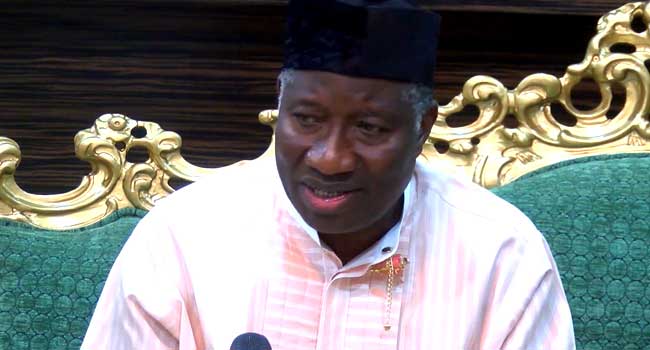
Some Persons want To Tarnish My Image, Says Jonathan


Nigeria’s immediate former President Goodluck Jonathan on Sunday said some persons have launched a campaign aimed at tarnishing his image.
In a post on his official Facebook page, the former President posted a disclaimer that a campaign of calumny has been launched against him by some persons who according to him are faceless and some identified.
“It has been brought to my attention that while I am away promoting democracy in Sierra Leone, a campaign will be unleashed against me to falsely impugn my name using both faceless and identified persons,” his post read.
The former President’s name has recently been mentioned in the media concerning some certain issues.
Cambridge Analytica has earlier been accused of obtaining data of Facebook users for election manipulation, an issue which has raised specks of dust in various countries, including Nigeria.
The ex-employee of Cambridge Analytica claimed that the firm interfered in Nigeria’s 2015 elections by hiring hackers to dig information about President Muhammadu Buhari who was a candidate of the opposition All Progressives Congress (APC).
The whistle-blower in an interview with Guardian UK did not reveal the identity of the person who paid Cambridge Analytica for its services but described him as a Nigerian businessman who wanted to ensure former President Goodluck Jonathan’s re-election.
Also in Nigeria, Jonathan’s administration has been in the news over alleged funds mismanagement.
Vice President Yemi Osinbajo had claimed that the former President’s administration shared about N150 billion before the 2015 elections.
Professor Osinbajo made the allegations on Monday, last week while speaking on issues of corruption and past failures of governments at the 7th Presidential Quarterly Business Forum in Abuja.
In his disclaimer on Sunday, Jonathan did not mention names of the persons he claimed are campaigning to tarnish his image. He, however, emphasised that his political ideals of disdain for bloodletting and falsehood remain.
“When I was in power I said my ambition is not worth the blood of any Nigerian. Even out of power, I continue to hold that belief.
“What I will say, however, is that no matter how far and fast falsehood has traveled, it must eventually be overtaken by the truth. GEJ,” his post read.
Jonathan has since not reacted to the claims by Buhari’s administration or the allegations raised in the Guardian UK interview.

His aide, Reno Omokri in an interview on Channels Television’s Programme Programme, Politics Today, however, countered claims by Vice President Yemi Osinbajo. He said the allegations are “completely false”.

Saturday, 24 March 2018

Sympathy for white Austin bomber stirs debate about race and racism in the United States

ADDS THE YEAR 2010, WHEN THE PHOTO WAS CREATED - This 2010 student ID photo released by Austin Community College shows Mark Anthony Conditt, who attended classes there between 2010 and 2012, according to the school. Conditt, the suspect in the deadly bombings that terrorized Austin, blew himself up early Wednesday, March 21, 2018, as authorities closed in on him, bringing a grisly end to a three-week manhunt. (Austin Community College via AP)

ADDS THE YEAR 2010, WHEN THE PHOTO WAS CREATED - This 2010 student ID photo released by Austin Community College shows Mark Anthony Conditt, who attended classes there between 2010 and 2012, according to the school. Conditt, the suspect in the deadly bombings that terrorized Austin, blew himself up early Wednesday, March 21, 2018, as authorities closed in on him, bringing a grisly end to a three-week manhunt. (Austin Community College via AP)

A cellphone recording left by the Austin serial bomber as "the outcry of a very challenged young man," the remark caused an outcry of its own.
Because the bomber was white, some people almost immediately questioned whether the same level of compassion would have been afforded a person of color.
"Here you have a case of a young white male who killed and injured people of color, and we're culturally more concerned about his story, about his life, about what led him to take these lives," said David Leonard, professor in the department of critical culture, gender and race studies at Washington State University. "It's a striking reminder of a racial empathy gap that persists."

Austin Police Chief Brian Manley briefs the media, Wednesday, March 21, 2018, in Round Rock, Texas. The suspect in a spate of bombing attacks that have terrorized Austin over the past month blew himself up with an explosive device as authorities closed in, the police said early Wednesday. (Ricardo B. Brazziell/Austin American-Statesman via AP)
For many observers and activists, the comments about Mark Anthony Conditt were just the latest example in which a white suspect seemed to receive an injection of humanity that is less often extended to blacks, Muslims and others.
Conditt kept the Texas capital in a state of fear for weeks, planting five bombs that killed two people and badly wounded four others. The 23-year-old community college dropout died Wednesday after setting off a bomb inside his SUV as police were about to arrest him.
Investigators said his motive was still unclear, despite the discovery of the 25-minute cellphone recording in which he talked about the bombs.
U.S. law has defined acts of violence or intimidation linked to foreign groups such as the Islamic State as terrorism. Homegrown extremist groups such as neo-Nazis and the Ku Klux Klan have not been labeled that way, even if they've employed similar tactics.
Similarly, when Stephen Craig Paddock was identified as the gunman who rained bullets down on a Las Vegas concert last fall, the white retired accountant was characterized as a "lone wolf." That label has also been attached to other mass killers who acted alone, including Aurora, Colorado, movie theater shooter James Holmes, a white man who killed a dozen people in 2012.
On the recording, Conditt "does not at all mention anything about terrorism, nor does he mention anything about hate," Austin Police Chief Brian Manley said. "But instead, it is the outcry of a very challenged young man talking about challenges in his personal life that led him to this point."
The reaction on social media was swift.
"Remember how they talked about innocent black children" like Trayvon Martin, Tamir Rice or Freddie Gray, tweeted Sherrilyn Ifill, president of the NAACP Legal Defense and Educational Fund.
"I believe passionately in acknowledging the humanity of those who commit even terrible crimes. Reading this police chief's empathy for this young white man highlights the awfulness — the plain awfulness — of the persistent refusal to extend this empathy to young black people," Ifill added.
Those young black males were described as "thugs" by some authorities and in popular discourse. Another case often cited is that of Michael Brown, an unarmed black 18-year-old fatally shot by a white officer in August 2014 in Ferguson, Missouri. The New York Times described Brown as "no angel" in a profile, a phrase that drew an angry response from readers and was criticized by its own public editor.
Brown got into a scuffle with then-officer Darren Wilson after Wilson yelled at Brown and a friend to get out of the street where they were walking. Wilson said that when he shot Brown, the teen was moving menacingly toward him. Some witnesses said Brown was surrendering.
The initial unrest erupted after Brown's body lay in the street for hours in the summer heat. More protests gripped the Missouri town after a grand jury in declined to charge Wilson, who later resigned. The Justice Department also cleared him, but an investigation by that agency uncovered patterns of racial bias and profiling in Ferguson's police and courts.
Some critics have also taken exception to media coverage that included Conditt's friends and family describing him as nerdy and kind.
"Language is always shot through with power dynamics. What this shows us is the way that we can talk about people determines how we can treat them," said Koritha Mitchell, an associate professor in the English department at Ohio State University. "Because we are determined to treat white men as citizens no matter what, to treat them as people who belong in the fold no matter what, that is the reason we will not use words like 'terrorist.'"
The Rev. Yvette Griffin, a black Detroit pastor, said blacks and Muslims don't seem to get the same presumption of innocence as other suspects.
"The words are kinder and gentler" for whites, she said.

Associated Press Writer Jeff Karoub in Detroit contributed to this report.

Dapchi Schoolgirl: We Were Flown in Planes and Taken Over Rivers in Boats as we return home from captivity


More curious details about how the Dapchi schoolgirls were returned to their town by Boko Haram on Wednesday morning have emerged, with one of the girls telling a British newspaper, The Guardian, that they were flown in planes, and taken over rivers in boat by the terrorists.
Hafsat Abdullahi phoned the British newspaper on Wednesday afternoon to say her 16-year-old sister Fatima, who had been taken, had been dropped off in Dapchi. She puts her sister on the phone.

Waving the black and white flag used by the Islamic State and wearing balaclavas, military fatigues and ammunition belts, members of the group released most of the girls they had abducted in Dapchi, Yobe State, early on Wednesday morning.“It took us three days to get back to Dapchi,” said Fatima. “We were divided into three groups and flown in planes, and taken over rivers in boats.”
Witnesses said the militants pulled up near Dapchi police station on Wednesday and shouted that parents should pick up their daughters. Initially, villagers ran away fearing another attack. But when they realised what was happening, they began to cheer and wave at the militants, chasing after their pickup trucks, some recording videos on their phones.
“Dapchi is full of joy,” said Mohammed Mdada, who saw the girls being whipped as they were driven away a month previously. He said the militants apologised to some of the girls’ parents in their language, Kanuri, and shook their hands before driving off.
“They said that if they knew they were Muslim girls they wouldn’t have abducted them,” Mdada said. “They warned the girls that they should stay away from school and swore that if they came back and found any girl in school, they’d abduct them again and never give them back.”
Usman Mataba, whose niece was among those returned, said she had talked to the militants. “I approached them and they told me that they had brought all the girls except six – that five had died on the day they were taken,” he said. “They said they discovered they were dead when they arrived at their destination, so they buried them.”
Mdada said he had been told the five girls were trampled to death. The sixth had “refused to cooperate” with them, Mataba said.
Amnesty International later said four girls were still missing. Locals said Boko Haram also dropped off a boy who had apparently been kidnapped by accident.
Soon after arriving back in Dapchi, the army took Fatima and her schoolmates
 “They took all of them to the hospital, Fatima is in the hospital now,” Hafsat said later, waiting at home to see her sister. “I heard that the chief of staff of the army is here and wants to take the girls with him to Damaturu. I don’t like that – I want her to stay.”
Their parents were not allowed in to see them, and the girls were soon put into vehicles and driven away. Their destination was Abuja, Nigeria’s capital, where they were to meet the president, Muhammadu Buhari.
In the aftermath of the Dapchi attack, Buhari said his government would negotiate with the militants, but in a statement released on Twitter on Wednesday he claimed there had been “backchannel” negotiations and that no ransoms had been paid.
This raises the question of what was offered to secure the girls’ release. The Nigerian government held several Boko Haram commanders who could have been handed over as barter.
Other aspects of the abduction and release remain murky. According to anAmnesty International report, the army and police had been warned that Boko Haram would abduct the girls and made no attempt to stop them.
They also had been warned that they would be brought back on Wednesday morning, according to Dapchi residents, and positioned themselves at the school they had been taken from, thinking that they would be dropped off there.
However, their kidnappers drove them into the centre of the village, close to the police station.
Neither the military nor the police attempted to apprehend the militants, who even stopped to change a tyre before leaving Dapchi, according to Mataba.
The big questions are: How did Boko Haram secure an aircraft to fly about 110 schoolgirls? Which airport did they land?
Courtesy of British Guardian Newspaper (International edition) World news and comment from the Guardian | The Guardian
Related Posts Plugin for WordPress, Blogger...